


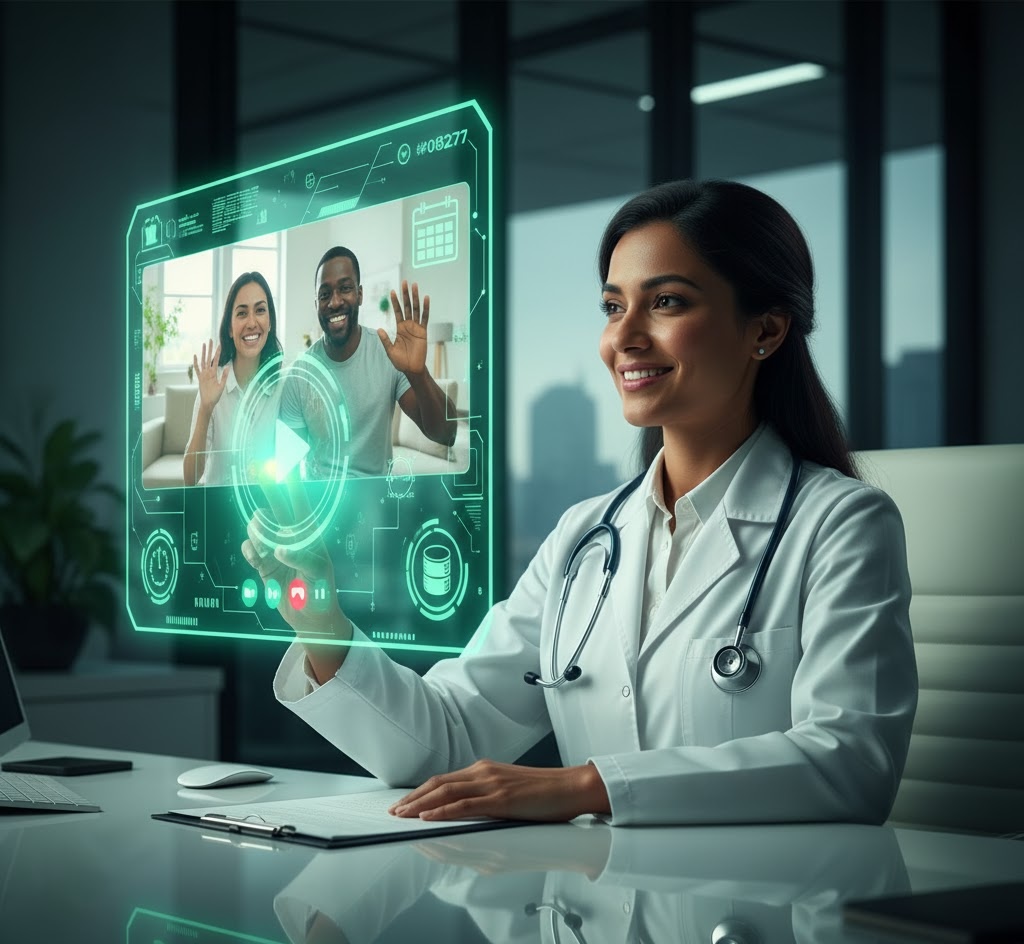
Medical video consultation: how it works, when it is indicated and how to fit it into clinical practice
The medical video consultation is a specialist visit carried out entirely at a distance through an encrypted video call between patient and doctor. It is an established telemedicine tool in Italy, governed by ministerial guidelines and by the GDPR, which lets patients receive consultations without physically coming to the practice—saving time and travel costs and lowering the geographical barriers to healthcare access. A video consultation does not completely replace a visit in the practice, but it is extremely useful for follow-ups, reviewing test results, monitoring chronic conditions and second opinions, and is a logical extension of modern medical practice.
In this article we look at what a video consultation is, when it is clinically indicated, the Italian legal framework, how to protect privacy under GDPR, the concrete benefits for doctors and patients, the technical limitations, and how to integrate video consultation with cloud medical practice management software such as BeebeeDoc, syncing clinical records, online bookings and medical documentation.
What a medical video consultation is and how it works
A video consultation is a medical appointment held through a secure video-call platform, in which patient and doctor interact in real time through audio, video and, often, shared medical documents. Unlike a simple WhatsApp or Zoom video call, a medical video consultation must guarantee GDPR compliance, end-to-end encryption, session traceability, integration with the clinical record and formal documentation of the visit.
Technically, the video consultation works like this: the patient receives an invitation link by email with the date and time of the session. 10-15 minutes before the agreed time, the patient opens the platform through the link, which takes them to a private “virtual room”. The doctor logs in from their side, identifying the patient through an identity check (security questions, tax code, health card). Once both are connected, the video call starts. All the traffic is encrypted: nobody, not even the platform provider, can intercept the audio or the video. During the session, the doctor can view the patient's clinical record, share images (e.g. test results), write prescriptions and ask for documents to be uploaded. At the end, the session is closed, recorded (if authorised), and a visit report is automatically saved in the clinical record.
When a video consultation is clinically indicated: the main use cases
The video consultation is appropriate in many clinical situations, especially those that do not require a direct physical examination. The main use cases include:
Post-visit follow-up: after an initial visit at the practice, the patient can have follow-ups by video consultation to assess the response to treatment, without having to come back in. This is common in cardiology, diabetology, rheumatology and other specialities.
Monitoring chronic conditions: patients with diabetes, hypertension, asthma, COPD or heart failure need regular monitoring. The video consultation allows monthly or quarterly appointments without the rigidity of travel time. The doctor can gather data through the patient (blood pressure measured at home, blood sugar, portable spirometry) during the video consultation.
Reviewing tests and medical reports: when a patient has had laboratory, radiology or instrumental tests, the video consultation lets the doctor discuss the results, explain their clinical meaning and change the treatment if needed, all without anyone travelling.
Specialist second opinion: a patient can seek a specialist opinion without travelling to another city. Very useful for rare or complex conditions where the number of specialists is limited.
Renewal of prescriptions and electronic prescriptions: many patients see the doctor simply to renew a prescription for a stable condition. Video consultation is perfect for this, and cuts waiting times.
Assessing minor symptoms: mild fever, colds, mild muscle pain, non-serious gastrointestinal upset, headache. The doctor can make a clinical assessment by asking the patient to show their throat (e.g. for suspected pharyngitis), observe skin conditions, assess general condition. Not every assessment requires palpation.
Counselling and educational consultations: discussions about lifestyle, nutrition, physical exercise, stress management and preparation for surgery. These do not require a physical examination and benefit from a thorough discussion.
The Italian regulatory framework for video consultation: ministerial regulations and accreditation
In Italy, telemedicine and video consultations are governed by specific rules. In 2020 the Ministry of Health issued the “Telemedicine Guidelines” (Ministerial Decree of 2 November 2020), which define telemedicine as healthcare services delivered remotely by healthcare professionals. The guidelines require that: the video consultation is requested by the patient or suggested by the doctor, the platform complies with the GDPR and guarantees encryption, the doctor has the appropriate specialisation for the service, informed consent is collected and documented, the session documentation is kept for 10 years in the clinical record, and the visit is traceable and non-repudiable.
As for accreditation, a medical practice that wants to offer video consultations must hold FSE 2.0 certification (Fascicolo Sanitario Elettronico version 2.0, Italy's Electronic Health Record), which includes telemedicine as a service. In addition, if accredited with the SSN (Servizio Sanitario Nazionale, the national health service), the video consultation must fall within the services covered-not all current accreditations provide for this, but the trend is towards gradual inclusion.
During the COVID-19 pandemic, the Italian Government extended access to video consultations to doctors not accredited with the SSN as well, allowing private professionals to deliver telemedicine without formal restrictions. This opening remains valid in 2024-2025.
Bring video consultations into your medical practice
BeebeeDoc combines video consultation, cloud clinical records and online bookings in a single platform. Let your patients book video consultations, run the sessions, document every appointment in the record. FSE 2.0 accredited, GDPR-compliant. 15-day free trial, no card required.
Privacy and GDPR compliance in video consultations: how to protect patient data
A video consultation handles personal data and particularly sensitive health data. GDPR compliance (EU Regulation 2016/679) is mandatory. The necessary measures include:
End-to-end encryption: the video and audio signal must be encrypted in transit, ensuring that no one (including the platform) can intercept it. Minimum standard: TLS 1.2 or higher. BeebeeDoc uses military-grade encryption (AES-256) on every session.
Documented informed consent: before the video consultation, the patient must sign a consent form stating that they understand the session will be held remotely, that the data will be recorded in the clinical record, and how the data will be processed. This consent must stay in the record for legal traceability.
Data Protection Impact Assessment (DPIA): a medical practice that introduces video consultation should carry out a DPIA to identify privacy risks and put mitigating measures in place. Mandatory if the volume of data is significant.
Limited retention: the recording of the session (if authorised) must be kept only for as long as necessary. Usually the video is deleted after 10 days (time for the patient to request a copy if needed), while the visit report stays in the clinical record for 10 years.
Full audit trail: every access to the video consultation, every change to the documentation, every viewing of the clinical record must be logged and traceable. If the Garante della Privacy (Italy's data protection authority) inspects the practice, this traceability is essential to demonstrate compliance.
Benefits of video consultation for doctors and patients
For patients: removal of travel costs (fuel, parking, taxi), shorter overall time (no travelling), better access for elderly or disabled people, flexible hours (evening slots can be offered), less exposure to infectious diseases in the waiting room, continuity of care without geographical interruptions.
For doctors: time savings-a follow-up video consultation takes less time than a visit to the practice (there is no paper record, no patient waiting in the corridor), higher productivity (more consultations a day in the same hours), fewer no-shows (the patient is already at home, so is less likely to forget), a wider patient base (not limited to those who can come to the practice in person), integration with the cloud clinical record reduces manual paperwork.
Limits of video consultation and when it is not advisable
Despite the advantages, video consultation is not suitable for every situation. It is not advisable when: a full direct physical examination is needed (palpation of the abdomen, assessment of neurological reflexes, Romberg's test, detailed inspection of a wound), the patient reports emergency or life-threatening symptoms (chest pain, loss of consciousness, severe breathing difficulty), the patient does not have a stable internet connection, the patient is not digitally literate and cannot use the platform, or the doctor suspects a condition that requires immediate diagnostic tests (ultrasound, laboratory).
In these cases the in-practice consultation remains the preferred standard of care. The video consultation should be presented to the patient as a complementary tool, not a replacement.
How video consultation fits with the cloud clinical record and online booking
Modern cloud practice management software like BeebeeDoc brings video consultation, clinical records and bookings into a single ecosystem. Here is how the flow works:
Phase 1 - Booking: the patient opens the BeebeeDoc portal, sees the slots available for the chosen doctor and selects one. While booking, the patient states whether they want a visit at the practice or a video consultation. The system confirms the booking and sends an email/SMS reminder.
Phase 2 - Preparation: before the session the doctor opens the patient’s clinical record in BeebeeDoc and reviews the clinical history, previous tests and current treatment. There is no hunting through paperwork and no information is lost.
Phase 3 - Session: the BeebeeDoc app automatically opens the "virtual room" for the video consultation. During the session, the doctor can view and annotate parts of the record, share images from tests, and write prescriptions that are signed digitally straight away. The patient sees everything in real time.
Phase 4 - Documentation: at the end of the video consultation, BeebeeDoc automatically generates a visit report documenting: length of the session, reason for the visit, clinical examination, diagnosis, treatment plan, prescriptions issued. Nothing has to be typed in by hand by the doctor. This report is saved in the clinical record with a timestamp and a digital signature.
Phase 5 - Follow-up: if a follow-up is needed, the doctor can automatically book a new video consultation through the system. The patient receives a notification and can confirm it in one click.
How to book and use a video consultation: a practical guide for patients
Step 1: register on the medical practice's website (e.g. the BeebeeDoc portal). Provide your personal details, tax code, email and phone number.
Step 2: search for the doctor or specialist you need. Filter by type of consultation (video consultation or in the practice).
Step 3: choose the date and time you prefer. The system shows availability in real time.
Step 4: make the payment online (credit card, bank transfer, PayPal, depending on the methods accepted). You receive confirmation by email with the video call link.
Step 5: 10 minutes before the appointment time, open the link on a computer, tablet or smartphone. Make sure your webcam, microphone and Wi-Fi connection are working. Choose a private, quiet place.
Step 6: during the video consultation, describe your symptoms clearly, show any tests or documents you have with you, take notes on the doctor's advice. At the end, download the visit report from your patient portal.
Technology and tools needed for the video consultation
A video consultation requires minimal but reliable technical infrastructure. On the patient side: any device with a webcam (computer, tablet, smartphone), an up-to-date web browser (Chrome, Safari, Firefox, Edge), a stable internet connection (minimum 2 Mbps upload/download). On the doctor side: the same applies, with the addition of an integrated cloud clinical record (e.g. BeebeeDoc) and possibly a second screen to view the patient and the clinical record at the same time.
The platform must support: recording of the session (if authorised), screen and document sharing, text chat, session history, certified GDPR compliance, and a FAD (distance learning) certificate for doctors attending medical webinars during the video consultation.
Video consultation FAQ
Is a video consultation covered by the SSN (Italy's national health service) or do I have to pay for it privately?
It depends on accreditation. If the practice is SSN accredited and the video consultation is among the contracted services, it is covered. Otherwise it is paid for privately. Advise your doctor to check.
Can I record the video consultation for my own personal records?
The platform may offer recording, but the doctor has to authorise it. You cannot record without the doctor's consent.
If the connection drops during the video consultation, what do we do?
The platform tries to reconnect automatically. If that fails, the doctor contacts the patient by phone to finish the session, or a new video consultation is rescheduled.
Is a video consultation with a specialist valid without a first assessment by the GP?
Yes, it is valid. Many patients go straight to the specialist. However, for SSN (Italy's national health service) prescriptions the stamp of the GP may be needed—check with the facility.
Conclusion: the video consultation as a modern standard of care
The medical video consultation is an established and effective tool which, combined with a cloud clinical record and an online booking system, changes the way doctors and patients interact. It allows continuity of care, lowers geographical barriers, improves the productivity of the medical practice and increases patient satisfaction, without compromising clinical quality.
If your medical practice does not yet offer video consultations, now is the time to introduce them. BeebeeDoc combines video consultation, clinical record, online booking and invoicing in one FSE 2.0 accredited platform. Try it free for 15 days—no card required—and see how video consultation can modernise your medical practice.
Start your free trial today
Want to try BeebeeBoard? The trial is free. No credit card required, and for 15 days you can explore everything BeebeeDoc can do.