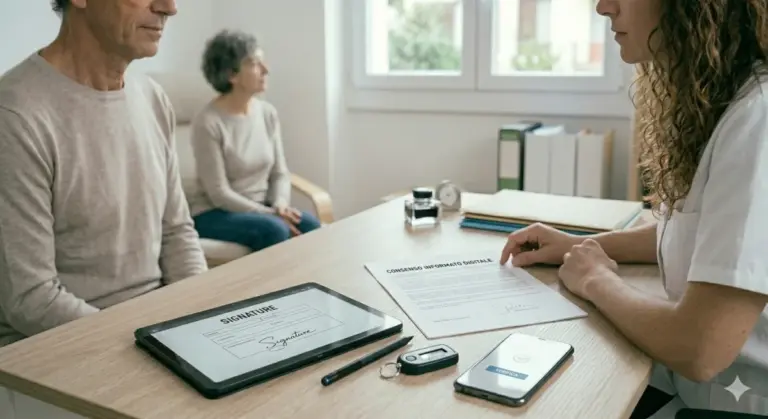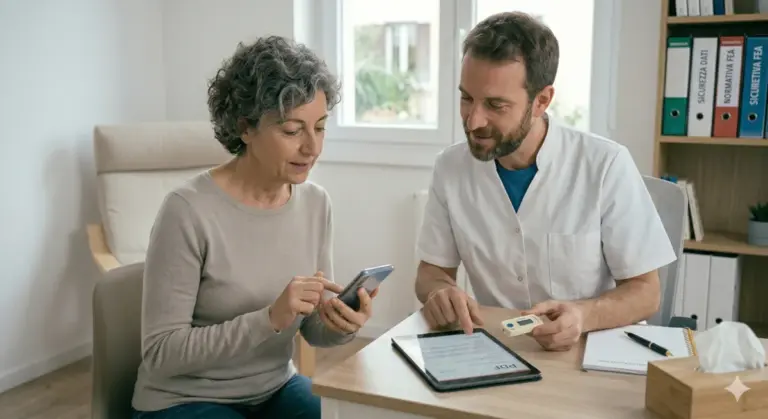
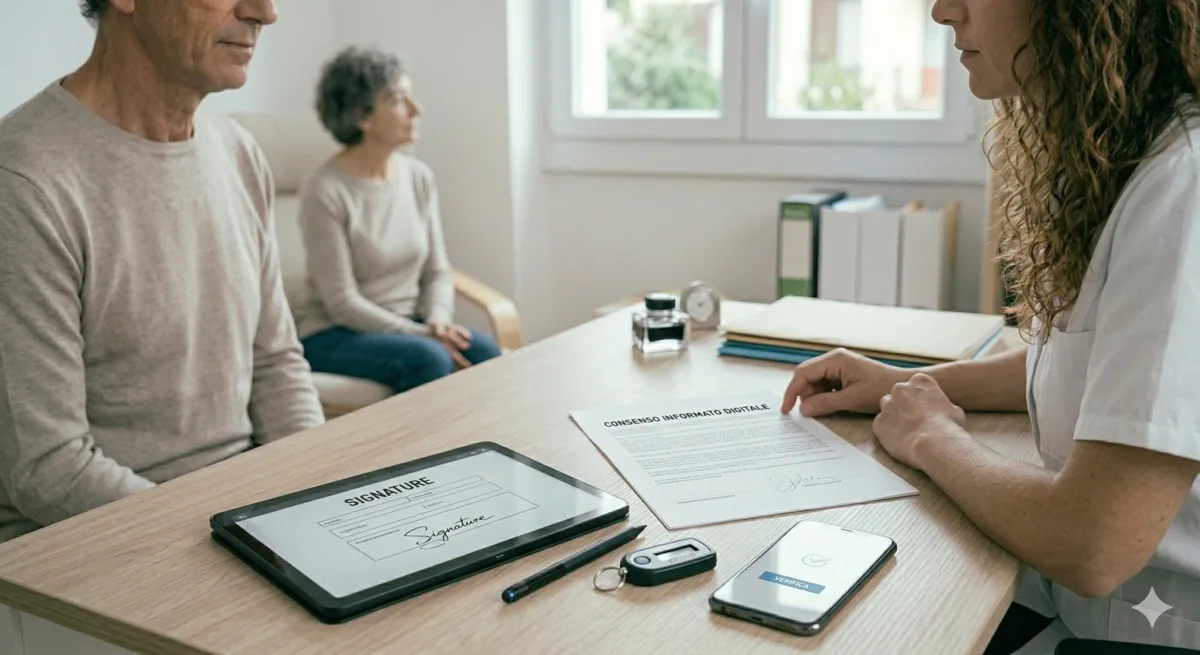
The graphometric signature and the OTP signature are two legal ways of signing medical documents. The choice depends on the clinical context and on patients' needs.
What is the graphometric signature?
The graphometric signature is an advanced digital signature captured on a tablet or dedicated device. It records unique biometric features of the patient's signature.
During graphometric signing, key biometric data is recorded:
- Speed of writing and gestures.
- Pressure applied to the surface of the device.
- Tilt and angle of the pen.
- Acceleration and deceleration of movements.
- Total duration of the signature itself.
This biometric data makes the graphometric signature almost impossible to forge. It is the most secure method available in the medical sector.
What is the OTP signature?
The OTP signature is a one-time code sent to the patient by SMS or email. It is a fast authentication method, accessible from any device.
The OTP signature process is simple and immediate:
- The patient receives a unique 6-digit code by SMS or email.
- The code is valid for only a few minutes.
- The patient enters the code into the system to confirm.
- The signature is recorded and the document signed.
It requires no special hardware or technical skills. It is ideal for remote or elderly patients.
Graphometric or OTP signature? With BeebeeDoc you have both
BeebeeDoc is the cloud medical practice management software that combines graphometric signature on a tablet and OTP signature by SMS for every need. 15-day free trial, no card required.
Direct comparison: graphometric signature vs OTP signature
Security and legal validity
Both methods have full legal value under the eIDAS rules. They are recognised as advanced digital signatures by Italian and European law.
The graphometric signature offers a higher level of security. The biometric data make forging the signature practically impossible.
The OTP signature still offers adequate protection. The code is valid only for a limited time and is tied to the patient's telephone number or email.
Hardware and infrastructure
The graphometric signature requires a tablet or specific device in the practice. It needs an initial investment in dedicated hardware.
The OTP signature needs no special hardware. It works from a smartphone, a computer or any device with an internet connection.
Ease of use
The graphometric signature is intuitive for the patient. It mimics a traditional signature on paper, a natural and immediate gesture.
The OTP signature is just as simple, especially for remote patients. It takes only a few seconds to enter the code received.
Operating costs
The graphometric signature carries maintenance costs for the tablet device. It needs technical support and occasional replacement over time.
OTP signature has SMS or email running costs. Generally lower than the hardware infrastructure for graphometric signature.
When to use the graphometric signature
Use the graphometric signature when maximum security is the priority. Ideal for critical informed consent and sensitive documents.
Situations where the graphometric signature is the better choice:
- Informed consent for high-risk surgery.
- Legal documents that could be challenged.
- Clinical records with highly sensitive data.
- Medical practices working with patients who have demanding regulatory needs.
- Documentation for ongoing legal proceedings.
The graphometric signature is ideal for specialist clinics. It offers complete peace of mind in the event of future disputes.
When to use the OTP signature
Use the OTP signature when speed and accessibility are essential. Ideal for remote consultations and routine communications.
Scenarios where OTP signing is worthwhile:
- Remote medical appointments and teleconsultations.
- Patients who cannot physically come to the practice.
- Routine medical documentation and follow-up.
- Simple prescriptions and medical reports.
- Consents for minor administrative matters.
- Older patients who prefer simple methods.
The OTP signature suits modern digital medicine. It lowers geographical and technological barriers for patients.
Regulatory compliance: eIDAS, GDPR and CAD
Both methods comply with the eIDAS Regulation (EU 910/2014). EU law classes them as advanced digital signatures.
Graphometric and OTP signatures also comply with the CAD (Digital Administration Code). They are considered legally equivalent to a handwritten signature.
As regards the GDPR (General Data Protection Regulation), both systems guarantee:
- Lawful and informed collection of biometric data.
- Minimisation of the personal data required.
- Protection through encryption and secure servers.
- Right of access, rectification and erasure for the patient.
- Compliance with the medical practice's privacy clauses.
The biometric data of the graphometric signature requires explicit consent under the GDPR. BeebeeDoc handles this regulatory compliance automatically.
How it works with BeebeeDoc
BeebeeDoc builds both signing methods into the same cloud medical practice management software. You will not have to choose: it supports both graphometric and OTP signatures.
With BeebeeDoc you can:
- Create custom forms for consent and documentation.
- Choose the graphometric signature for visits at the practice.
- Choose OTP signature for remote patients and teleconsultations.
- Record all signatures in the digital clinical record.
- Access complete audit trails for every signature.
- Export signed documents in a legally valid format.
BeebeeDoc simplifies the management of medical consents. You no longer have to handle paper or separate files for different signing methods.
Conclusions: which one to choose?
It is not a choice between "good" and "bad". It is a choice of clinical and operational context. The best solution is to have both available.
Choose the graphometric signature for critical documents and patients on site. Choose OTP signing for remote consultations and operational speed.
BeebeeDoc lets you use both without compromise. It builds full management into the patient's digital clinical record.
It supports both those working in the clinic with maximum security and those with patients spread across the country. It is the most flexible, modern solution for Italian digital medicine.
Start your free trial today
Want to try BeebeeBoard? The trial is free. No credit card required, and for 15 days you can explore everything BeebeeDoc can do.