

The OTP (One Time Password) signature is a secure, legally valid way to collect digital signatures from patients, both in the practice and remotely.
What an OTP (One Time Password) signature is
An OTP signature is a form of digital signature based on a single-use code. The patient receives a temporary code by SMS or email and enters it to sign a document. Once used, the code is no longer valid.
This guarantees authenticity and non-repudiation. The patient is the only person who receives the code, and only whoever holds it can complete the signature. No handwritten or biometric signature is needed.
The OTP signature sits between a simple signature and a qualified one. It carries substantial legal weight under European law, and for many clinical situations it is more practical than an advanced digital signature.
How OTP signing works, step by step
The process is simple and intuitive for the patient. It takes a few minutes from start to finish, with no special software or digital certificates.
- The patient opens the document: The patient receives a link, or goes to the platform where the document is held.
- They choose to sign: They click the button to sign the document.
- They receive the OTP code: A six-digit code arrives by SMS or email.
- They enter the code: The patient types the code into the field provided.
- The signature is validated: The system checks the code and records the signature with the date and time.
Let patients sign remotely with an OTP code
BeebeeDoc is cloud practice management software that collects OTP signatures by SMS and email for consent forms and documents. Free 15-day trial, no card required.
The legal standing of OTP signatures
The OTP signature has solid legal standing under European law. The eIDAS Regulation recognises this form of authentication, and in many contexts it is equivalent to an advanced electronic signature (FEA).
In Italy, the Digital Administration Code (CAD) explicitly recognises the OTP signature. It does not carry the same weight as a qualified digital signature, but it is stronger than a simple electronic signature.
For clinical documents, the OTP signature meets the traceability requirements the GDPR imposes. It records who signed, when, and from which device — data that matters for compliance.
Italian courts recognise OTP signatures in both civil and criminal proceedings, and they have already been used as evidence in numerous cases. For clinical use they are entirely suitable.
Where medical practices use OTP signatures
The OTP signature suits many of the documents a medical practice handles every day. It offers flexibility and security in any situation.
Informed consent and consent to treatment
Informed consent is fundamental in medicine and has to be signed before a procedure. With an OTP signature the patient can sign from home, before the appointment.
The doctor sends the consent form by email. The patient receives the OTP code and signs straight from their phone. No printed paper, no handwritten signatures.
Privacy and GDPR forms
Every practice has to collect GDPR consent for processing personal data. The OTP signature makes that consent verifiably genuine and documented: the system records the date, the time and the signer's identity.
If anyone checks, the practice has firm proof that consent was collected. There is no doubt about authenticity or date.
Reports and results at a distance
The patient can receive reports by email and sign the acknowledgement form. The OTP signature confirms they have seen the report — useful for laboratories and diagnostic services.
This removes the need to come into the practice purely to collect results. It speeds things up and improves the patient's experience.
Medical history forms and clinical data
Patients can complete their medical history from home before the appointment. Once filled in, they sign with OTP to confirm the data is accurate, and the practice holds an officially signed version.
This speeds up reception and improves the quality of the data collected. The patient has time to think about allergies and past conditions.
OTP or graphometric signature: which to choose
A graphometric signature is a traditional signature written on a digital pad. It works when the patient is physically in the practice. The OTP signature is better for patients at a distance, or who cannot come in.
A graphometric signature captures the biological characteristics of the writing — pressure, speed, angle. Its legal weight is very high, which makes it right for sensitive documents signed in person.
The OTP signature is faster and needs no extra hardware. It works on any phone or computer, which makes it ideal for preliminary consents and less critical documents — legally valid all the same.
Many practices use both. In the consulting room they use graphometric signatures; for documents sent remotely they choose OTP. Between them, the two cover everything.
How BeebeeDoc handles OTP signing
BeebeeDoc is cloud practice management software with OTP signing built into the platform. No extra app, no technical complications.
The practice uploads the document. BeebeeDoc generates a signing link to send to the patient, who receives a personalised link by SMS or email.
When the patient clicks, they see the document to be signed. They enter their contact details if asked, then receive the OTP code by SMS or email, whichever they chose.
Once signed, the document returns to the practice automatically and is archived with the date and time of signing. All data stays protected to GDPR and HIPAA standards.
OTP signing in the practice with BeebeeDoc
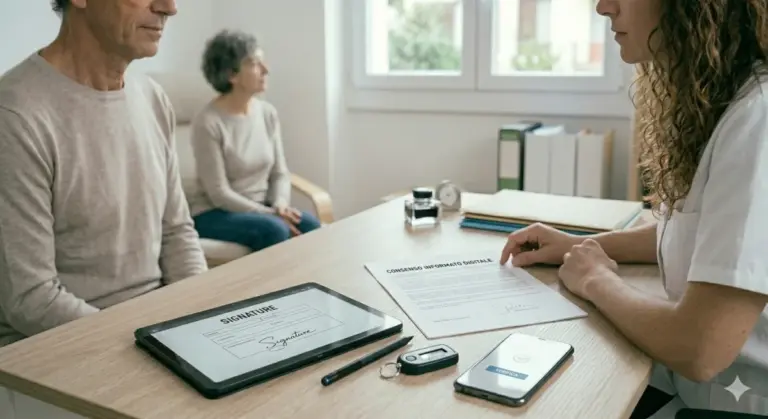
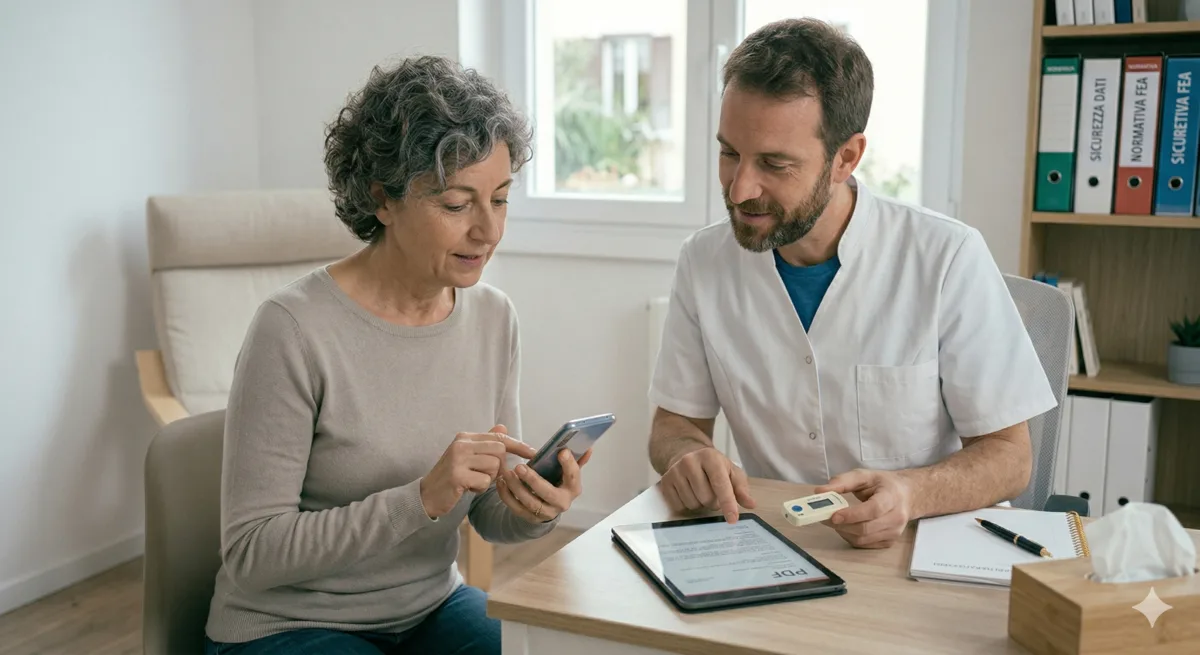
The patient is sitting in the consulting room with the doctor. The document is shown on the practice's computer or the patient's own. They click to sign and receive the OTP code by SMS.
It is immediate and secure, and the doctor can watch the process in real time. Ideal for informed consent before a procedure.
OTP signing at a distance with BeebeeDoc
The patient receives an email with the signing link. They can sign from home, from the office, from anywhere, at any hour.
The system sends an automatic reminder if the patient has not signed within a set time. The practice can see who has signed and who has not — useful when collecting consent across many patients.
What OTP signing gives a medical practice
- Legally valid: Recognised under eIDAS, the Italian CAD and the GDPR. Accepted in court.
- Fast and intuitive: Patients have no trouble with it. No long technical explanations needed.
- Accessible: Works on any device. No app, no certificates.
- Traceable: Records date, time, IP address and device. Exactly what compliance requires.
- Remote: Patients can sign from anywhere, at any time.
- Secure: The code is single-use and valid for a few minutes. It cannot be forged.
- Integrated: With BeebeeDoc, signing is automatic. No documents to handle by hand.
- Affordable: No investment in hardware or expensive certificates.
Frequently asked questions about OTP signatures
Is an OTP signature as legally valid as an advanced digital signature?
Under eIDAS, the OTP signature is a form of advanced electronic signature (FEA) and carries the same legal weight in many contexts. For highly sensitive documents a qualified signature is still preferable, but for most clinical documents OTP is enough.
What if the patient does not receive the OTP code?
BeebeeDoc sends the code by SMS or email, whichever the patient prefers. If the SMS does not arrive, the system can use email instead. The practice can contact the patient to check the phone number or address.
How long does the OTP code stay valid?
Usually ten minutes. If the patient does not enter it within that window they have to request a new one. It is a security measure against unauthorised use.
Is the data protected under the GDPR?
Yes. BeebeeDoc is GDPR compliant, every document is encrypted and signatures are stored securely. The practice keeps full control of its data.
Conclusion
The OTP signature is a modern, secure and legally valid option for medical practices. It is recognised under European law (eIDAS) and Italian law (CAD, GDPR), and it works equally well in the consulting room and at a distance.
With BeebeeDoc, putting OTP signing in place is straightforward. Patients can sign consent forms, GDPR notices and reports in seconds, and the practice keeps a complete record of every signature.
If your practice is not using OTP signing yet, now is the time. It improves efficiency, cuts paperwork and strengthens compliance. Try BeebeeDoc free for 15 days and see how simple it is.
Start your free trial today
Want to try BeebeeBoard? The trial is free. No credit card required, and for 15 days you can explore everything BeebeeDoc can do.